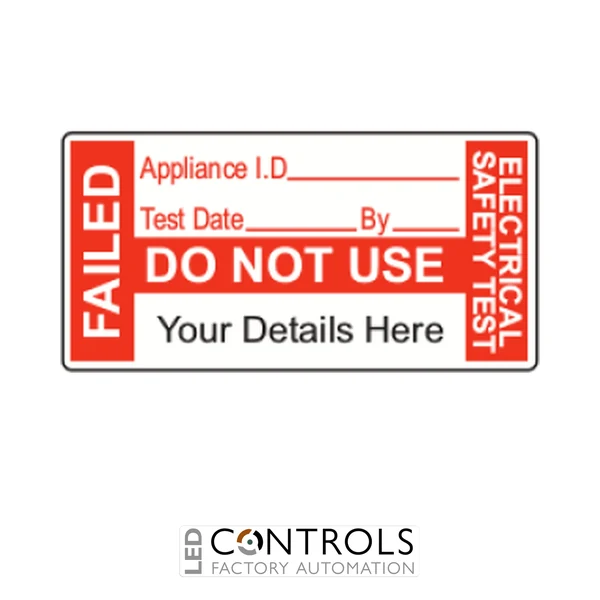
Why Choose the Partex SL3819PATFR250 PAT Failed Polypropylene Label?
The Partex SL3819PATFR250 is a 38 mm × 19 mm PAT Failed polypropylene label designed for identifying electrical equipment that has failed a Portable Appliance Testing (PAT) inspection. Supplied as a roll of 250 labels, it provides a practical solution for electrical testing professionals, maintenance engineers and facilities management teams responsible for identifying appliances that require attention following inspection.
As part of the Partex electrical safety and inspection labelling range, the SL3819PATFR250 helps communicate a failed PAT inspection status directly on the relevant appliance or equipment. Its polypropylene construction provides a durable label material suitable for routine equipment identification and maintenance labelling applications.
Featuring a compact 38 mm × 19 mm format, these PAT Failed labels are suitable for identifying electrical appliances without occupying excessive surface space. The 250-label roll supports efficient dispensing and application during scheduled electrical safety inspections, workplace equipment checks and ongoing maintenance programmes.
Key Advantages
- Dedicated PAT Failed labels for identifying electrical equipment that has not passed inspection.
- 38 mm × 19 mm label dimensions provide a compact identification format.
- Polypropylene label material offers a practical solution for equipment identification.
- Helps communicate failed electrical inspection status to equipment users and maintenance personnel.
- Supports organised Portable Appliance Testing and electrical safety management procedures.
- Suitable for electrical contractors, facilities management teams and workplace maintenance departments.
- Convenient roll of 250 labels for repeated inspection and labelling tasks.
- Helps distinguish equipment requiring attention from appliances that have passed inspection.
Key Features
- Partex SL3819PATFR250 PAT Failed label.
- 38 mm nominal label width.
- 19 mm nominal label height.
- Polypropylene label construction.
- Designed for Portable Appliance Testing failure identification.
- Compact rectangular label format.
- Suitable for electrical appliance and equipment identification.
- Roll format for convenient storage and dispensing.
- Supports inspection record identification and maintenance workflows.
- Roll quantity: 250 labels.
Technical Specifications
- Manufacturer: Partex
- Product range: PAT Testing and Electrical Safety Labels
- Model: SL3819PATFR250
- Product type: PAT Failed identification label
- Label width: 38 mm
- Label height: 19 mm
- Label dimensions: 38 × 19 mm
- Material: Polypropylene
- Label identification: PAT Failed
- Supply format: Roll
- Quantity per roll: 250 labels
- Application: Portable Appliance Testing failure identification
- Intended use: Electrical equipment inspection and safety status labelling
Clear Failed PAT Identification for Electrical Safety Management
Portable Appliance Testing involves inspecting and, where appropriate, electrically testing equipment to assess its condition and identify potential safety concerns. When an appliance fails the inspection or testing process, clear identification helps prevent confusion about its status. The Partex SL3819PATFR250 PAT Failed label provides a visible means of marking equipment that requires further assessment, repair or removal from service.
The 38 mm × 19 mm polypropylene labels are supplied in a roll of 250, making them convenient for electrical testing contractors and maintenance departments working across multiple appliances or locations. A failed PAT label should form part of an appropriate equipment isolation and maintenance procedure; labelling alone does not make an unsafe appliance safe or replace the need to prevent its use until it has been assessed and made safe.
Typical Applications
- Portable Appliance Testing failure identification.
- Electrical safety inspections in commercial buildings.
- Workplace appliance inspection and maintenance programmes.
- Facilities management and building maintenance.
- Electrical equipment testing by professional contractors.
- Identification of appliances requiring repair or further assessment.
- Schools, offices, workshops and industrial premises.
- Electrical inspection record management and equipment status identification.